
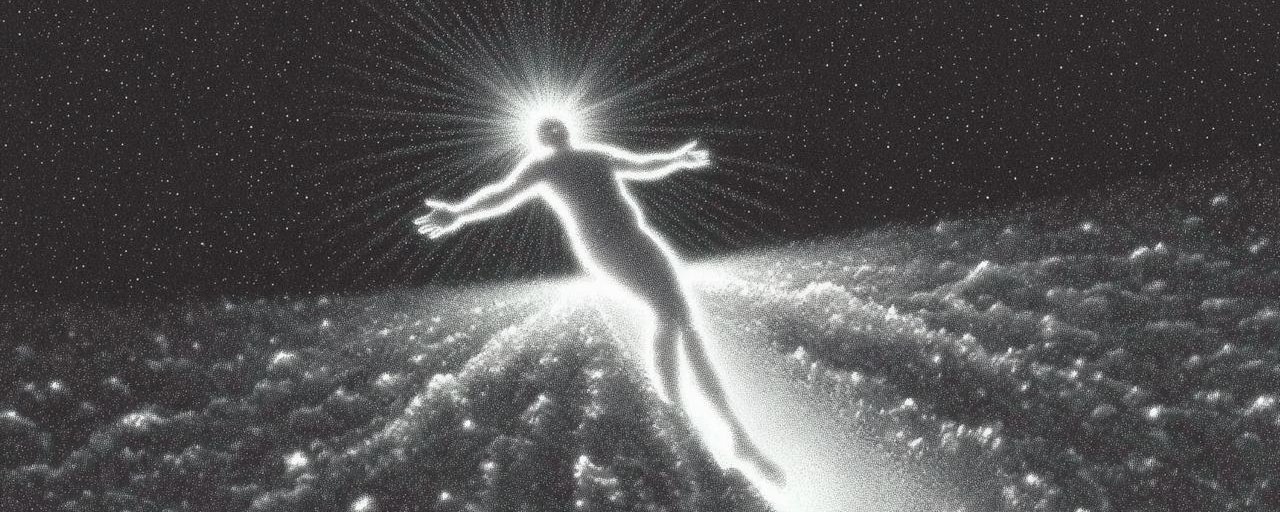
For a hundred years, the most powerful machine for shaping how humans think, feel, and remember has been controlled by one industry. One city. One system.
Hollywood.
Every revolution in film, every shift in what moves people, every new way of telling a story... all of it ran through the same gates, the same studios, the same people who decided what the world gets to see. You wanted to make something that reaches millions, you either played by their rules or you didn't play.
That just ended.
Over the past few weeks, my brother and I spent over $150,000 on Seedance 2 video generations from a villa in El Salvador.
No crew. No studio. No equipment except laptops and an internet connection.
We generated over 90 hours worth of shots, stitched dozens of complete short films, A/B tested every visual style we could think of, and pushed the model until we understood exactly where it breaks and exactly where it produces something that makes your chest tighten.
The entire film world changed, and most people haven't noticed yet because they're still arguing about whether AI art is "real."
Everything here applies outside of film. The mechanic is universal. The specifics are ours.
What Video AGI actually means
Video AGI is not one perfect model. It's not a single generation that looks indistinguishable from a RED camera shoot. That's not what changed.
What changed is the loop.
You describe a scene in 200 words, generate it in four minutes, watch it, adjust three words in the prompt, regenerate, watch again, and repeat this cycle fifty times in a single afternoon for less than the cost of lunch. The gap between idea and execution collapsed to minutes, and when that gap closes, everything about how you create changes... because the bottleneck was never talent. The bottleneck was always the cost of trying.
A professional film crew costs $50,000 a day. That means every shot is a bet, and nobody makes bets they're not almost certain will pay off. So everything looks the same. Every ad follows the same template. Every trailer hits the same beats. Innovation dies when experimentation is expensive.
We spent $4.50 on a single 15-second shot of an 80-year-old woman playing piano on the surface of Mars at sunset, and it came back looking like a Terrence Malick film. Camera slowly orbiting her, red dust drifting past like snow, both Martian moons visible through a thin pink atmosphere, her fingers moving with practiced grace over the keys while the sound reverberates across an empty alien landscape. $4.50.
We spent $7.55 on five shots and stitched together a 35-second short film. Total time from concept to finished video... forty minutes.
We generated a complete satirical documentary series, 200+ individual shots across 15 versions, testing every angle from BBC Earth parody to VHS propaganda to oil-painting anime... and the total cost was less than a single day of a junior editor's salary.
That's what Video AGI means. Not one perfect shot. The ability to try everything, fail cheap, and compound what works.
The numbers
561 shots generated. 71% overall success rate, climbing to 90% on refined prompts. Cost per shot... $3 to $4.50 for 10 to 15 seconds of cinema-quality footage. Every shot generated in under five minutes. 100 shots running in parallel.
We tested five visual styles per concept, minimum. Cinematic, Fincher-dark, Nolan-epic, Malick-golden, VHS retro. We ran them side by side and let the data pick the winner instead of our taste, and the data surprised us every time.
The 1990s home video aesthetic hit at 85%+ success rate, which nobody expected... because the imperfections ARE the style. The grain, the warmth, the handheld shake, the slightly overexposed highlights. All of it is features, not bugs. The model doesn't have to be perfect when the style rewards imperfection.
Here's what we learned about making AI video that actually moves people:
Emotional specificity beats adjectives. "A father looks confused" produces garbage. "Blank stare, slow blink, sips coffee, looks up at ceiling, then back at the kid, shakes his head and walks away" produces something that feels uncomfortably real... because the model doesn't understand emotions, but it understands sequential actions. Five micro-actions beat one adjective every single time.
One impossible thing in one normal place. A piano on Mars. An astronaut walking through a Moroccan souk. A 500-foot stone giant playing violin on a fjord. A little girl drawing galaxies into existence with a yellow crayon. The contrast between the ordinary and the extraordinary is what makes people stop scrolling, and it costs the same $4.50 whether the scene is boring or impossible.
Objects carry emotion better than faces. A red leather book. A pair of mugs on a windowsill. A broken crayon. Faces drift between generations, but objects stay locked, and if you build your story around an object instead of a character's face, you get visual continuity for free across an entire sequence.
Pain beats spectacle. The first version of a girl drawing a universe was "cool." The second version where her crayon breaks halfway through and she keeps drawing with the broken piece was something else entirely. Give the character a problem, a cost, something at stake... and the footage goes from impressive to affecting.
Chain shots, don't batch them. The last frame of shot one becomes the first frame of shot two. Each generation feeds forward into the next, so a 5-second clip becomes a 30-second story becomes a 3-minute film... each piece carrying visual continuity from the one before it.
All of this discovered through brute-force experimentation that would have cost millions two years ago and cost us less than a used car.
The system behind the system
The shots don't generate themselves. The real compound effect comes from what feeds into the generation.
We built cloud agents that run 24/7 with one job each... monitoring. One watches X for trending topics in real time. One tracks which of our published content performs and why. One cross-references generation data against engagement data and tells us which visual styles produce content that actually converts to followers and deals, not just content that looks good in a portfolio.
Here's what a trend-monitoring agent looks like in practice:
You monitor [your niche] on X 24/7. Track the top 50 accounts. When a post crosses 10,000 impressions within 4 hours and touches more than one audience simultaneously, flag it immediately with the topic, why it's crossing niches, and three content angles that add to the conversation instead of restating it. Weekly summary: which topics gained momentum, which died, which accounts grew fastest and what they posted differently. Find patterns I'm blind to because I'm inside the feed.
That agent found us the KitKat play. KitKat pulled a heist at an F1 race and it blew up online. Our agent flagged it within minutes... brand controversy, motorsport, heist narrative, crossing automotive AND advertising AND entertainment audiences simultaneously. We made a full AI commercial within hours. 1.5 million views. Five figures in deal flow in 48 hours. Headline news coverage we didn't pitch for.
Speed was the moat. Not quality, not budget, not connections... speed. We published the video while traditional agencies were still scheduling internal meetings to discuss whether they should make one.
And that's one agent. We run a board of them. Every week, all agents sit in the same conversation and argue with each other about what worked, what didn't, and what the single highest-leverage move for next week is. Not three priorities. One. Defended with data.
The prompt that runs the board meeting:
Board meeting. All agents present.
Round 1: what was the top-performing content this week and the worst, and why did each hit or miss using historical patterns as comparison.
Round 2: one format or topic gaining momentum right now with three specific examples.
Round 3: cross-reference performance data against the content pipeline, what should we accelerate and what should we kill.
Round 4: find one contradiction in our current strategy, something we say we're doing that the data says we're not.
Round 5: agree on the single highest-leverage action for next week and defend it with numbers.
You read the output and you find things about your own blind spots, your repeated mistakes, your wasted effort... things you'd never catch alone.
We've been running this weekly and it's the single best exercise we've found for staying honest about what's actually working versus what just feels productive.
The feedback compounds. What we learned in week one made week two sharper, which made week three dramatically better, and by week four we were generating 90%+ hit rates on refined prompts while discovering entire categories of content we'd never have conceived of without the data pointing us there.
The real opportunity
This isn't about film. Film is our lane because we studied it for years, but the mechanic is identical for anything you build.
When you can try everything, you can figure out who you actually are.
Most people spend a year, two years building in the wrong niche because the cost of testing a new direction is so high that they stay where they started. They picked something, sunk months into it, and now they're trapped by the investment even though the market keeps telling them nobody cares.
What if you could test 50 directions in a month?
Generate hundreds of videos. Build hundreds of micro-apps. Prototype hundreds of designs. Each one a data point. Not a guess, not a business plan sketched on a napkin, but actual work published to actual humans who tell you, through their clicks and bookmarks and follows and DMs, exactly what they want from you and exactly what they don't.
The VHS 90s aesthetic that now defines half our best work?
We found it by accident. Not from strategy, not from a moodboard, not from studying what competitors were doing. It came from a batch where the retro style outperformed everything else by 3x, and we leaned into it, iterated on it, and it became the signature... because we ran the experiment instead of theorizing about what should work.
Install an agent. Point it at your field. Crypto, politics, fitness, food, fashion, comedy, education... the structure is identical. The agent watches your niche, you create based on what it surfaces, the data tells you what resonates, you iterate, the iterations compound, and within weeks you understand your audience better than people who've been posting for years... because you're not guessing. You're running a system that learns from every single output.
Every time you publish something, you learn what works a little better, you understand what the world wants from you a little more, and the next thing you make is informed by everything that came before it. That's the compound loop. That's why speed matters more than perfection. A hundred attempts at 70% quality will teach you more than three attempts at 95%, and by attempt fifty you'll be producing work that the person agonizing over attempt three can't even imagine... because you have data they don't.
Every generation of media technology consolidated power into fewer hands. Radio into networks. Television into studios. Film into Hollywood. The pattern was always the same... the people who owned the infrastructure owned what the world believes.
This is the first time the pattern broke.
The infrastructure is an API key. The talent is whatever you've lived through and whatever you've studied. The distribution is the same feed everyone else is posting on.
We just spent $150,000 proving that two people with laptops can outproduce a studio system that took a century to build, and the tools we used are available to anyone reading this sentence for the same price we paid.
The question is whether you start now while the landscape is still open... or whether you wait until the people who started today have already built the studios, locked the relationships, and written the rules you'll have to follow.
The hierarchy is forming right now, and it won't send you an invitation.